Local War History
Wartime Blackouts in Leicestershire
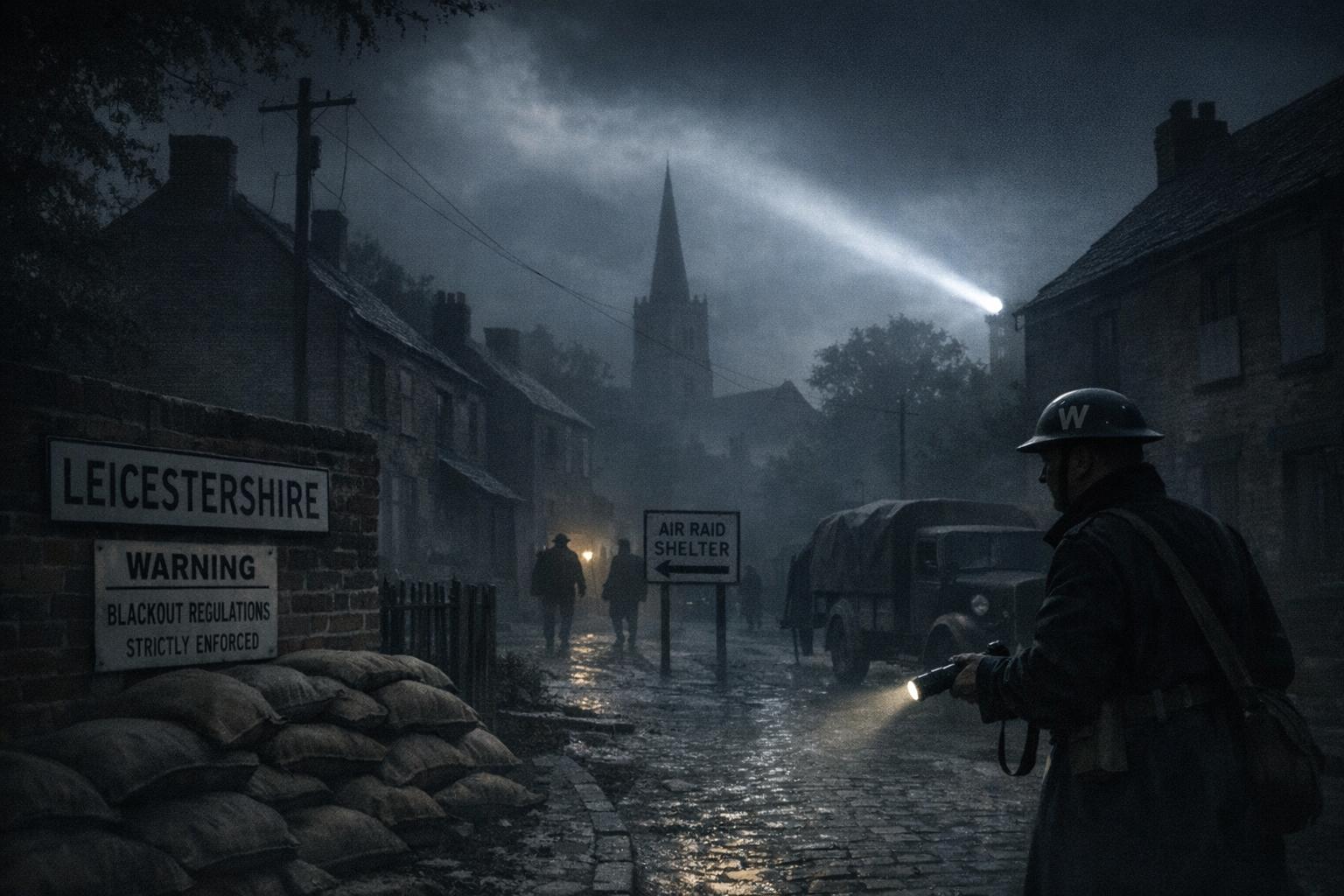
When Britain entered the war in September 1939, Leicestershire came under the same blackout regulations as the rest of the country. After dark, homes, shops, factories, railway stations and public buildings had to prevent visible light from escaping. Street lamps were switched off or…
Leicester and the Blitz
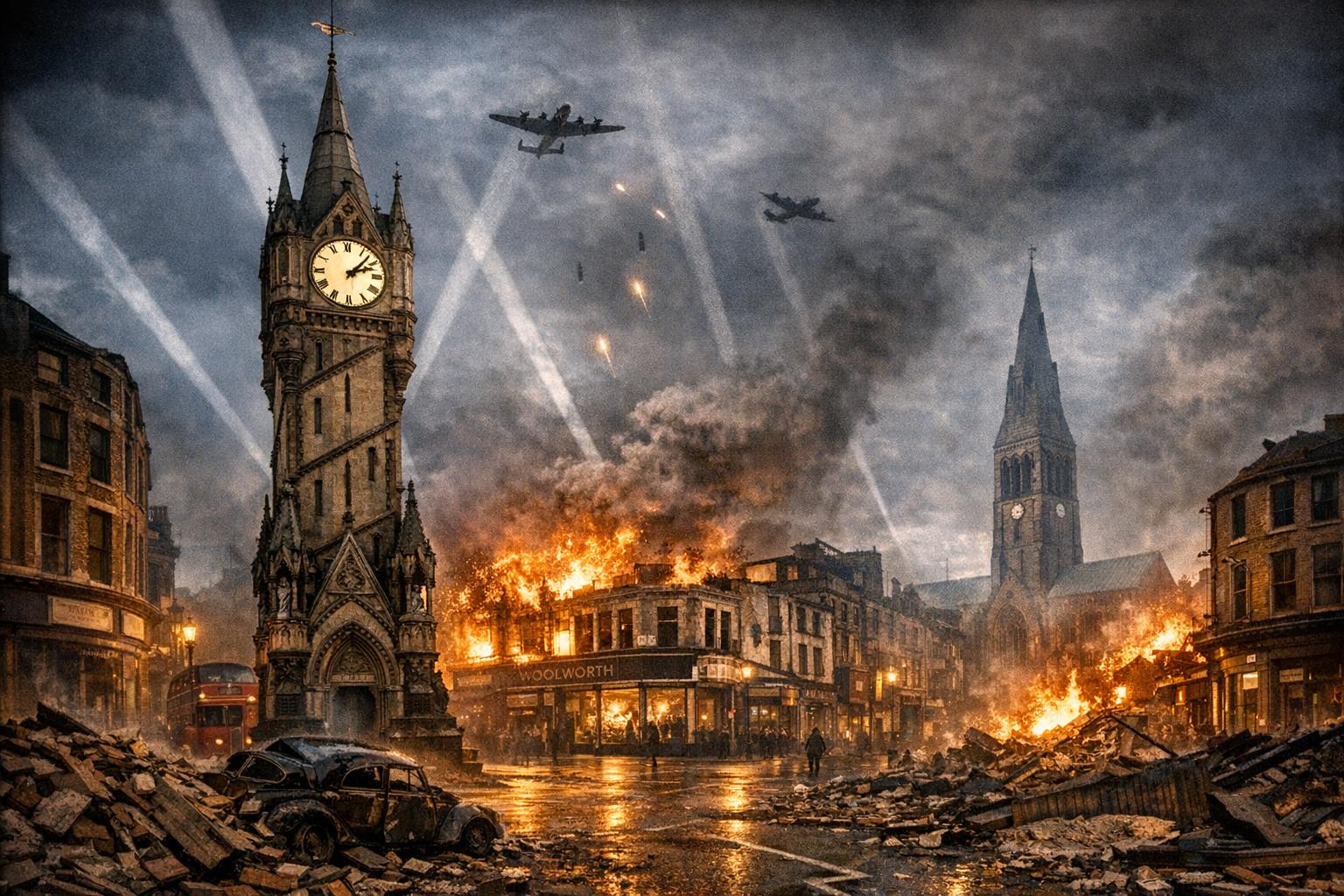
Leicester entered the Second War as a major industrial city with a population of roughly 240,000. Its factories produced footwear, textiles, engineering goods, clothing and components needed by the armed forces. Rail links connected the city with Birmingham, London, Derby, Nottingham and the ports….
Air Raids on Leicester During the Second World War
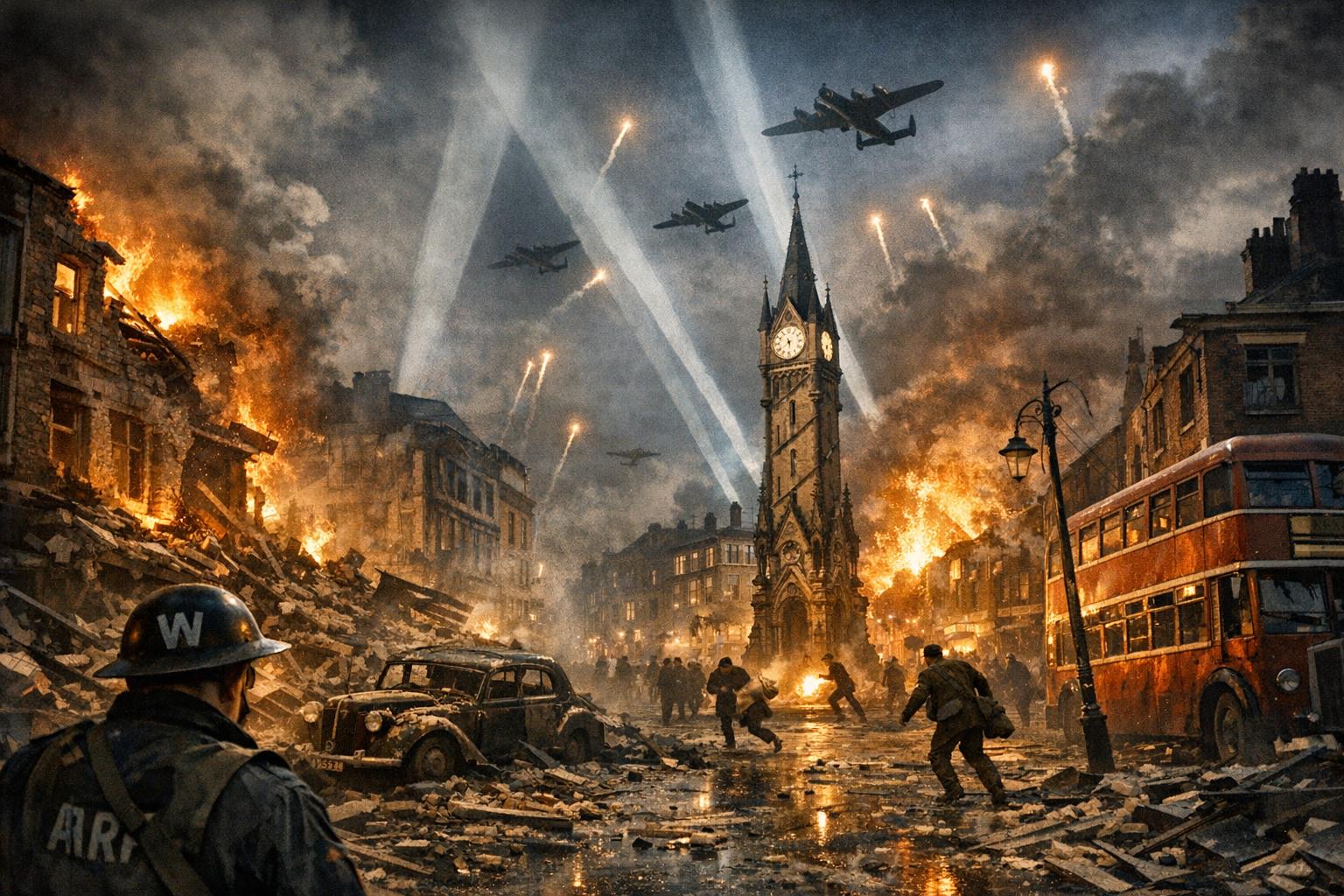
Leicester did not endure bombing on the scale suffered by London, Coventry or Birmingham, but German aircraft attacked the city repeatedly during the Second World War. Bombs killed civilians, destroyed homes, damaged factories and disrupted rail and road transport. The heaviest raid came on…
The Home Front in Wartime Leicestershire
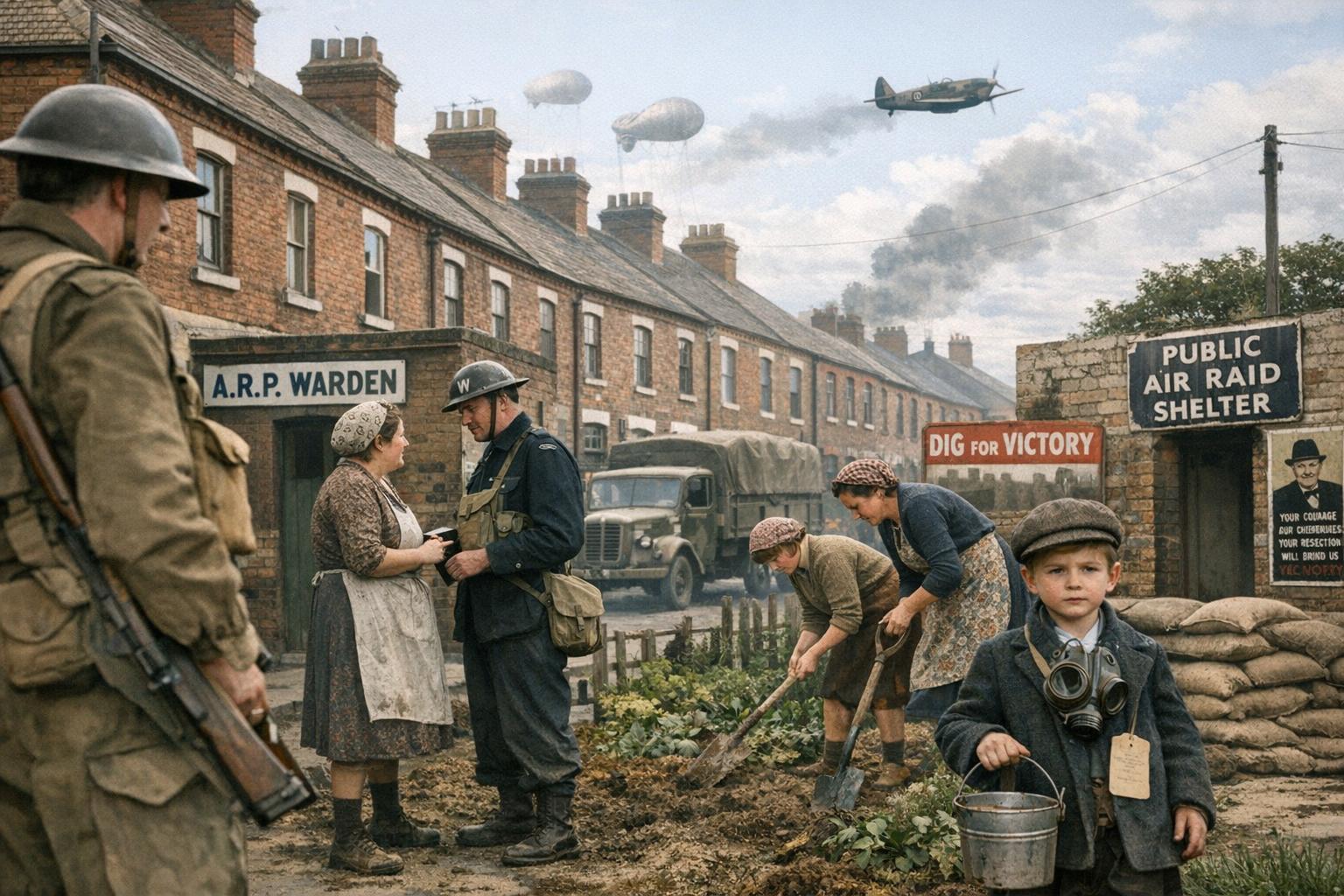
Leicestershire’s home front between 1939 and 1945 reflected the county’s place at the centre of England, its combination of industry and farming, and its busy road and rail connections. Leicester supplied clothing, footwear, engineering goods and processed food. The coalfield around Coalville provided fuel,…
Leicestershire During the Second World War
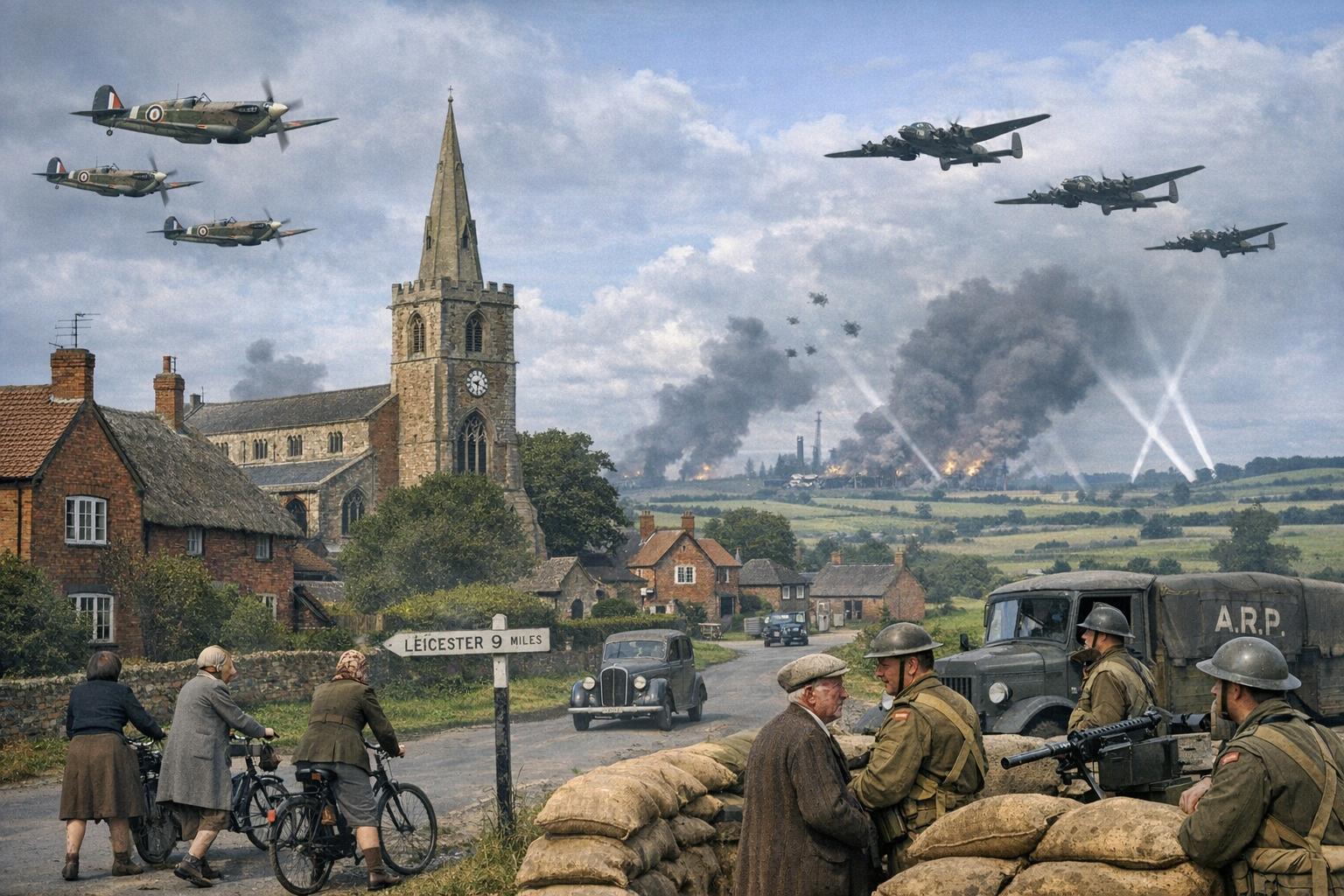
When war began in September 1939, Leicestershire combined a densely populated industrial centre with market towns, mining communities and a broad agricultural hinterland. Leicester was known for hosiery, knitwear, footwear and engineering. Loughborough, Hinckley, Coalville, Market Harborough and Melton Mowbray supported manufacturing, mining, food…
Leicestershire During the First World War
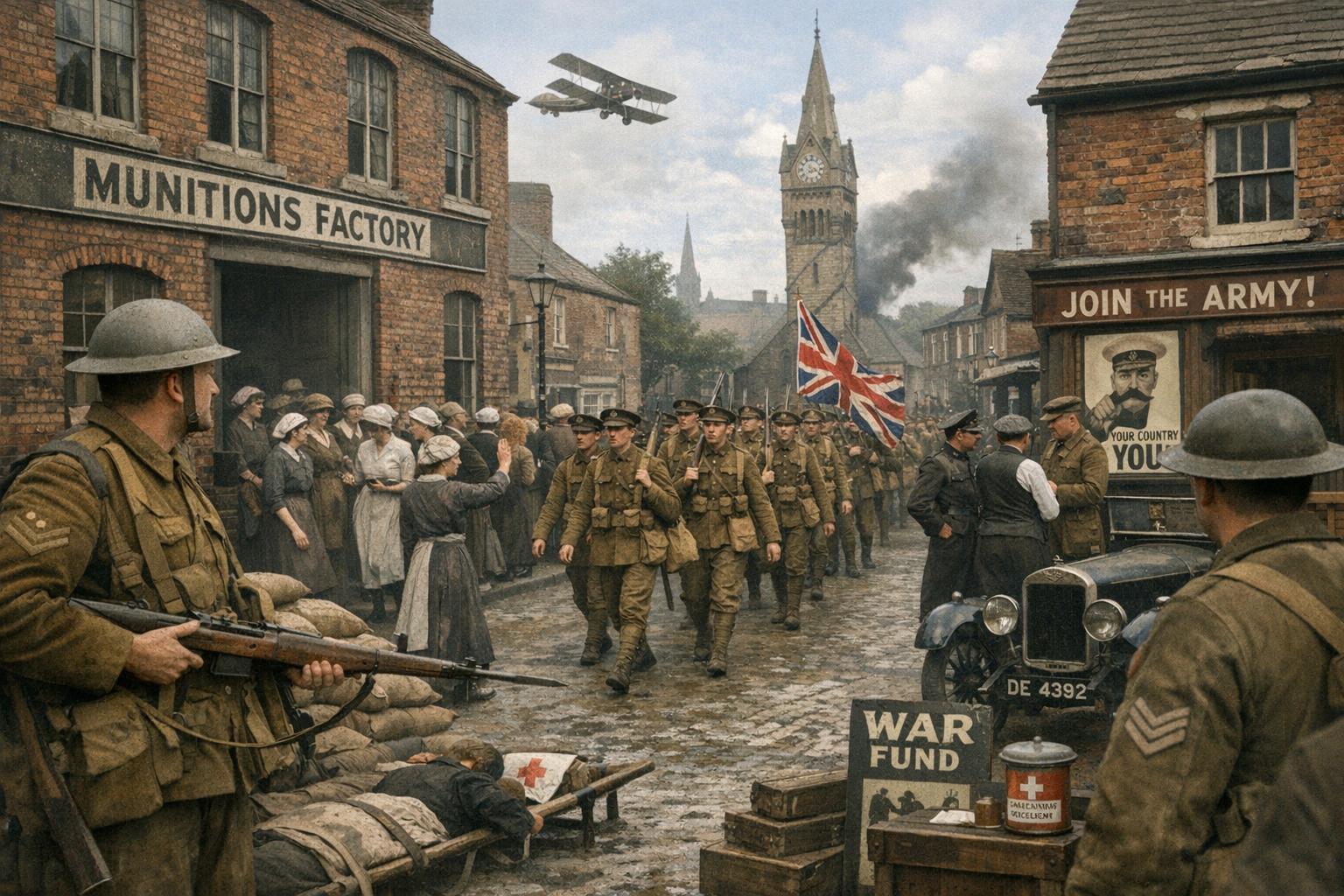
When Britain declared war on Germany on 4 August 1914, Leicestershire was a county of factories, mines, farms and expanding market towns. Leicester, then a county borough administered separately from the county, remained the region’s commercial and manufacturing centre. Railways, roads, employment and family…